There’s a lot we can learn from the careers of women who have shaped industries, challenged expectations, and built something meaningful through their work.
Their paths are rarely simple or linear. Many faced setbacks, changed directions, or had to advocate for themselves in environments that didn’t initially recognize their value.
Yet across industries—from business and entertainment to entrepreneurship—their journeys reveal several common themes.
Strong careers are often built through a combination of vision, mastery, collaboration, and reinvention.
These qualities show up at different stages of a career. Sometimes they appear when someone is leading a major organization. Other times, they emerge when someone is refining their craft, building relationships that support growth, or navigating a pivotal moment of change.
Looking at how successful women have navigated these moments can offer valuable perspective for professionals at any stage of their careers.
Here are a few career lessons we can take from women who have led boldly, built influential careers, and reinvented themselves along the way.
Vision & Leadership: Seeing Possibility Before Others Do
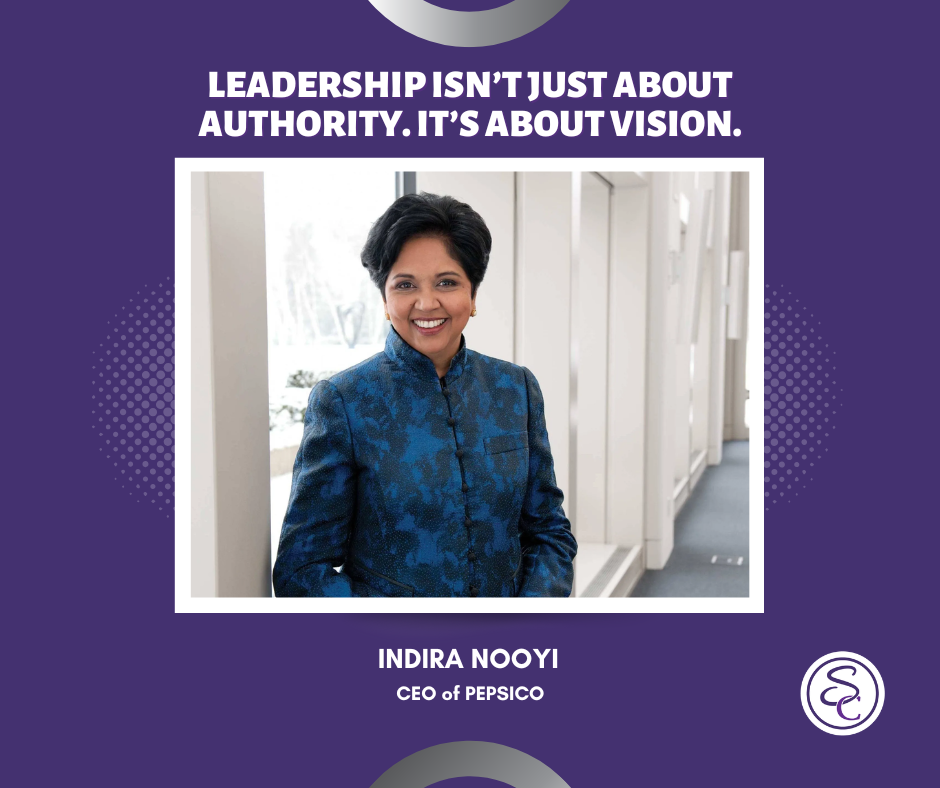
Leadership isn’t just about authority. It’s about vision, the ability to recognize opportunities and guide others toward them.
One of the most powerful examples of this kind of leadership comes from Indra Nooyi.
During her time leading PepsiCo, Nooyi pushed the company to think beyond short-term results. She invested in long-term strategy and pushed PepsiCo toward healthier product lines before the shift became mainstream.
Adapting to changing consumer preferences earlier than many competitors helped give the company a strategic advantage.
Her leadership reminds us that vision often means thinking beyond your current role or responsibilities.
You don’t have to be in the C-suite to demonstrate leadership. Professionals show vision every day by proposing better systems, advocating for new ideas, and thinking strategically about what comes next.
Leadership begins when you start looking forward rather than simply managing the present.
Mastery: The Confidence That Comes from Expertise
Strong careers are built on something deeper than titles; they’re built on mastery.
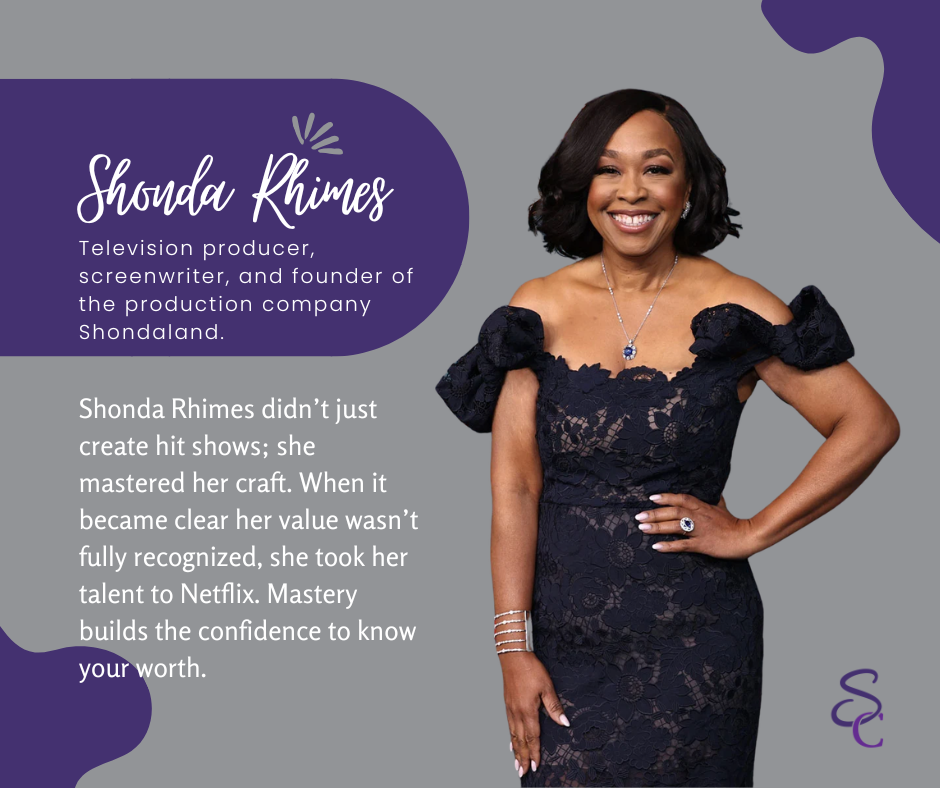
Shonda Rhimes is a powerful example of this. Over the years, Rhimes created some of the most influential television series of the modern era, including Grey’s Anatomy and Scandal. Her work shaped an entire era of network television.
But in 2017, she made a bold move. After years of success at ABC, Rhimes left the network for a landmark deal with Netflix.
What prompted the move? In interviews, Rhimes has pointed to a moment that revealed something important about her value. A relatively small request related to visitor passes for her family at Disneyland turned into a bureaucratic issue that made her feel undervalued. It became clear that the organization benefiting from her work didn’t fully recognize the impact she was having.
Instead of ignoring the signal, she paid attention to it. Because when you’ve spent years mastering your craft, you start to understand something important:
Your expertise has value, and it deserves to be respected.
Mastery builds that clarity. When you’ve spent years refining your craft, delivering results, and understanding your industry, you develop the confidence to advocate for yourself and pursue opportunities that match your impact.
Rhimes didn’t just rely on loyalty to a company. She trusted the body of work she had built, the skills she had refined, and the results she consistently delivered. That confidence allowed her to step into a new opportunity where her creativity and leadership could expand even further.
Mastery does more than make you good at your job. It gives you the clarity and confidence to recognize when it might be time for something bigger.
Mastery Isn’t Always Linear
When people talk about mastery, they often imagine a straight path: practice, improve, succeed. But careers rarely work that way.
Take Alysa Liu.
She became one of the most exciting young talents in figure skating, winning national titles as a teenager. Then, unexpectedly, she stepped away from the sport entirely. Many assumed her competitive career was over.
But when Liu returned to skating, she came back with a new perspective and ultimately won Olympic Gold. She had a voice in her training schedule, diet, performance music, and choreography.
Her story is a reminder that mastery isn’t just about relentless forward motion. Sometimes it requires stepping back, reevaluating, and rediscovering why you love the work in the first place.
For professionals, the career lessons are powerful: Career growth doesn’t have to follow a perfect timeline. Breaks, pivots, and resets can all be part of building deeper expertise.

Collaboration: Success Is Built with Others
While expertise helps build confidence, long-term career success rarely happens alone. Careers rarely grow in isolation. The ability to collaborate, to work effectively with others while still contributing your own strengths, is one of the most valuable professional skills.
Catherine O’Hara offers a great example of this balance. In a tribute at the SAG/AFTRA Awards, Seth Rogen described her as someone who is “generous, kind, and gracious while never minimizing her own talents.”
That balance matters.
There’s a misconception, especially in competitive environments, that you have to choose between being excellent or being kind.
But the strongest professionals do both. They bring a high level of skill to their work while creating space for others to contribute and succeed.
That’s not just personality. That’s leadership.

Building Something that Lasts
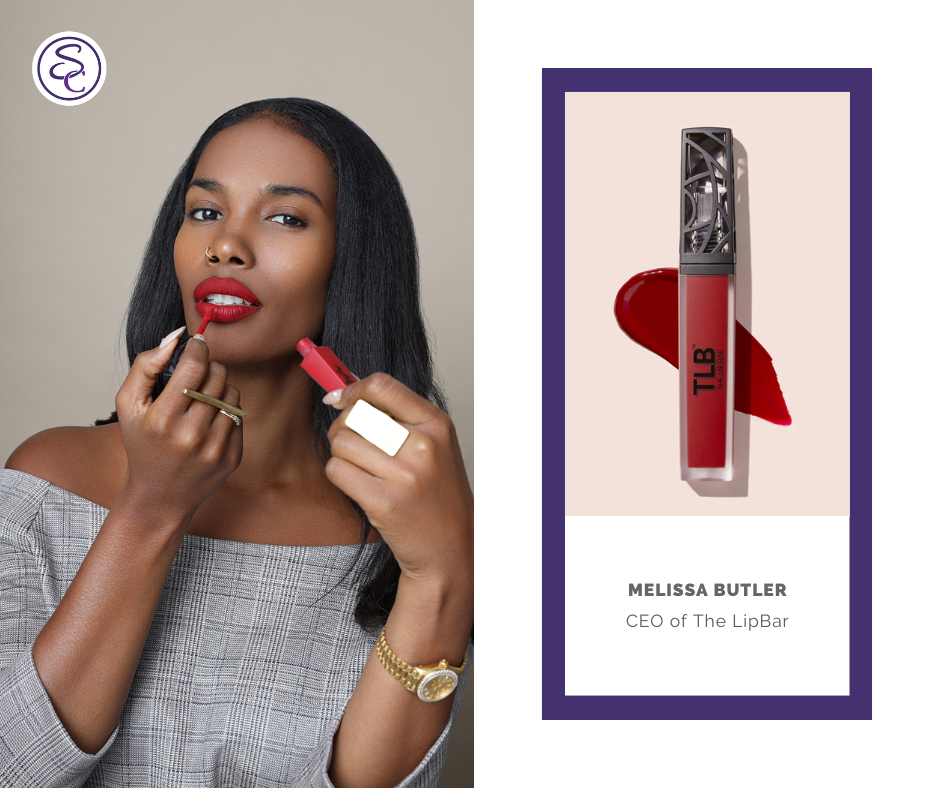
Melissa Butler didn’t follow a traditional path into beauty. She was a Wall Street analyst who started making lipstick in her kitchen, frustrated by an industry that lacked inclusivity and authenticity.
When she launched The Lip Bar, she faced early rejection, including a highly public one on Shark Tank. But she kept going, and she didn’t do it alone. Butler built her brand through intentional collaboration at every stage:
- Partnering with retailers like Target to scale distribution
- Building a team aligned with her mission — not just her skill gaps
- Creating a community of customers who felt seen and represented
- Expanding into physical retail in Detroit, investing back into her own community
She wasn’t trying to be the only voice in the room. She was building something bigger than herself, and that required the right people around her.
Here’s the career takeaway: Collaboration isn’t just about working well with others. It’s about knowing when your growth depends on bringing others in.
The strongest professionals and leaders don’t operate in isolation. They build ecosystems.
Reinvention: Careers Don’t Follow a Single Timeline
Even the most successful careers involve setbacks and pivots. Reinvention is often what allows professionals to continue growing when circumstances change.
Viola Davis is one of the most respected actors in the world today. She has achieved the rare EGOT — winning an Emmy, Grammy, Oscar, and Tony.
But her path to success wasn’t fast or easy.
For years, Davis worked steadily in smaller roles while navigating an industry that often limited opportunities for women who didn’t fit a narrow mold. Her breakout role in the film Doubt came when she was in her 40s, an age when many industries assume careers are already established.
Instead of accepting those limitations, Davis continued to evolve her career, take on challenging roles, and advocate for greater representation in storytelling.
Her journey is a powerful reminder that career momentum doesn’t have to follow a single timeline. Sometimes the most meaningful breakthroughs come after years of persistence, growth, and reinvention.

A Setback Doesn’t Have to Define Your Career
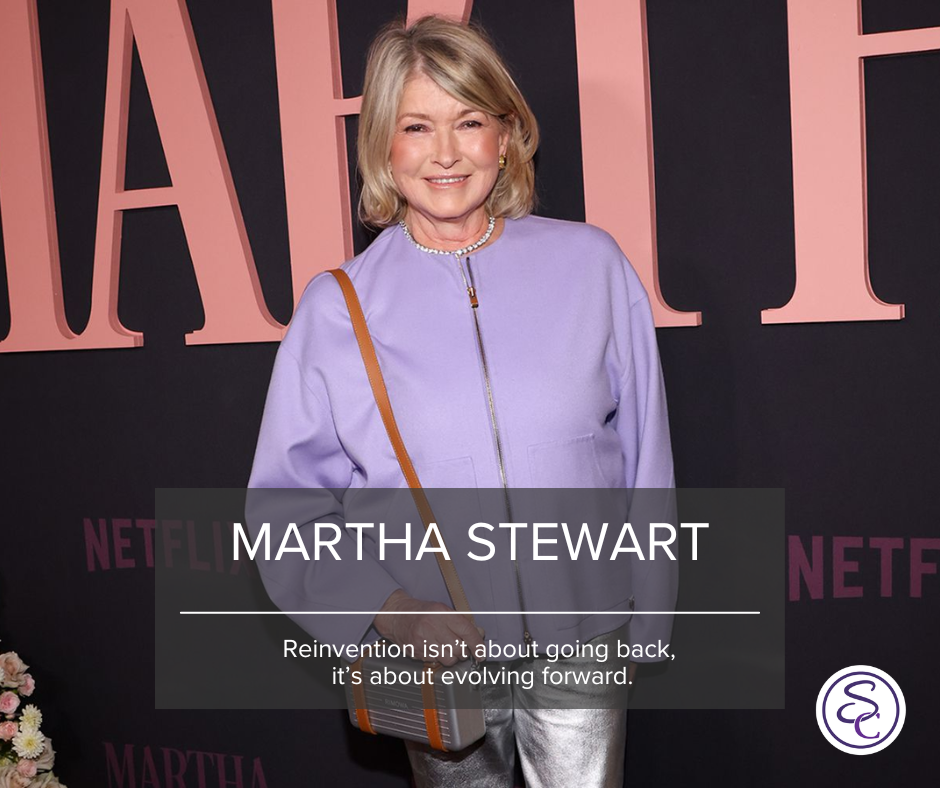
Few people embody that better than Martha Stewart. Stewart built one of the most recognizable lifestyle brands in the world: publishing magazines, launching television shows, and creating a business empire centered around cooking, entertaining, and home design.
Then came her arrest and conviction in the early 2000s that temporarily derailed her company and reputation. Many careers would have ended there.
Instead, Stewart did something remarkable: she rebuilt. She returned to television, re-established her brand, expanded into new product lines, and began reaching entirely new audiences through unexpected collaborations, including her wildly popular partnership with Snoop Dogg.
Rather than trying to return to the past, she evolved with the moment. Her career today looks different than it did 20 years ago, but in many ways, it’s more influential than ever.
That’s the real lesson of reinvention. It’s not about pretending setbacks didn’t happen. It’s about deciding what comes next.
Your Career is a Marathon, Not a Sprint
Careers are rarely defined by a single moment of success.
They are shaped over time — through bold decisions, setbacks, reinvention, and the relationships that support us along the way.
The women highlighted in these career lessons remind us that growth is ongoing. Vision can evolve. Expertise deepens. New opportunities appear when we are willing to adapt and keep moving forward.
In many ways, the most interesting chapters of a career are still waiting to be written.
Clarity changes everything—how you show up, how you’re perceived, and the opportunities that come your way.
If you’re ready to move forward with intention, I’ll help you get there. Start here.