In Part One of my Guide to Surviving a Layoff, we focused on the immediate aftermath of a layoff: staying professional, getting your logistics in order, caring for your mental and physical health, reflecting on your career, rebuilding your personal brand, and reconnecting with your network.

After the initial shock wears off, and you have more down time to process what just happened, a new set of deeper questions can set in:
What if I don’t know my next move yet?
What if I need to take a job that isn’t the job?
What if I’m doing everything I can—and it’s still hard?
Part one is logistics. Part two is mindset.
1. Let Go of the All-or-Nothing Thinking
One of the biggest mental blocks people face after a lay-off is the idea that the next job must be the job, the perfect role, the perfect company, the perfect step forward.
That pressure can be paralyzing. Here’s the reframe: What’s next doesn’t have to be forever.

A survival job (sometimes called a bridge job) is exactly what it sounds like: a role you take to support yourself financially while you figure out what’s next. It might not be the job you ultimately want, and that’s okay.
This could be:
- A role outside your industry
- Contract or part-time work
- Consulting, freelance, or temporary work
- A position that uses only part of your skill set
What a survival job is not:
- A failure
- A step backward in your career story
- A permanent decision
For many professionals, especially those who are mid-career, the idea of taking a survival job can feel emotionally loaded. There’s often a fear that it will “look bad,” undo years of experience, or somehow derail long-term goals.
In reality, a survival job can be a strategic pause, not a detour.
For some, it provides immediate financial relief and reduces the stress that comes with unemployment. For others, it serves as a palate cleanser, offering structure, routine, and a mental reset after a difficult or toxic work environment.
Unexpected benefits can include:
- Space to think more clearly about what you don’t want next.
- Exposure to new industries or ways of working.
- The chance to build or sharpen new skills.
- Rebuilding confidence through contribution and consistency.
Just as importantly, it can create the time and mental bandwidth needed to conduct a thoughtful, intentional job search, rather than one driven by panic or urgency.
That said, a survival job isn’t the right choice for everyone. If you have the financial cushion, emotional support, or personal circumstances that allow you to take more time and wait for the right role, that path is just as valid.
This isn’t an all-or-nothing decision. It’s a season – you are surviving a layoff. And the right choice is the one that supports you, financially, emotionally, and strategically, right now.
2.It’s Not You. It’s Them.
Even when you know a lay-off isn’t about performance, it can still feel deeply personal, especially if your career has been a big part of your identity.
For many professionals, work isn’t just something you do. It’s how you contribute, how you measure progress, how you find purpose, and how you see yourself in the world. So, when that role disappears, it can feel like the ground has been pulled out from under you.
That loss is real. And it deserves to be acknowledged.
But here’s what’s important to remember: Lay-offs are rarely about individual performance. They are most often driven by cost-cutting measures, restructuring, shifting priorities, or leadership decisions made far removed from the day-to-day work.
Strong performers are laid off every day. High-potential employees are laid off every day. People who did everything “right” are laid off every day. None of that erases the value you brought to your role.
What can happen, though, is that a lay-off quietly starts to rewrite the story you tell yourself:
- Maybe I wasn’t as good as I thought.
- Maybe I missed something.
- Maybe I should have worked harder, stayed later, spoken up less or more.
This is where confidence often takes the biggest hit, not because of what happened, but because of the meaning we assign to it.
You can hold two truths at the same time:
- This experience hurts and feels personal.
- This decision was not a referendum on your worth.
Your job was a role you held, not the sum total of who you are.
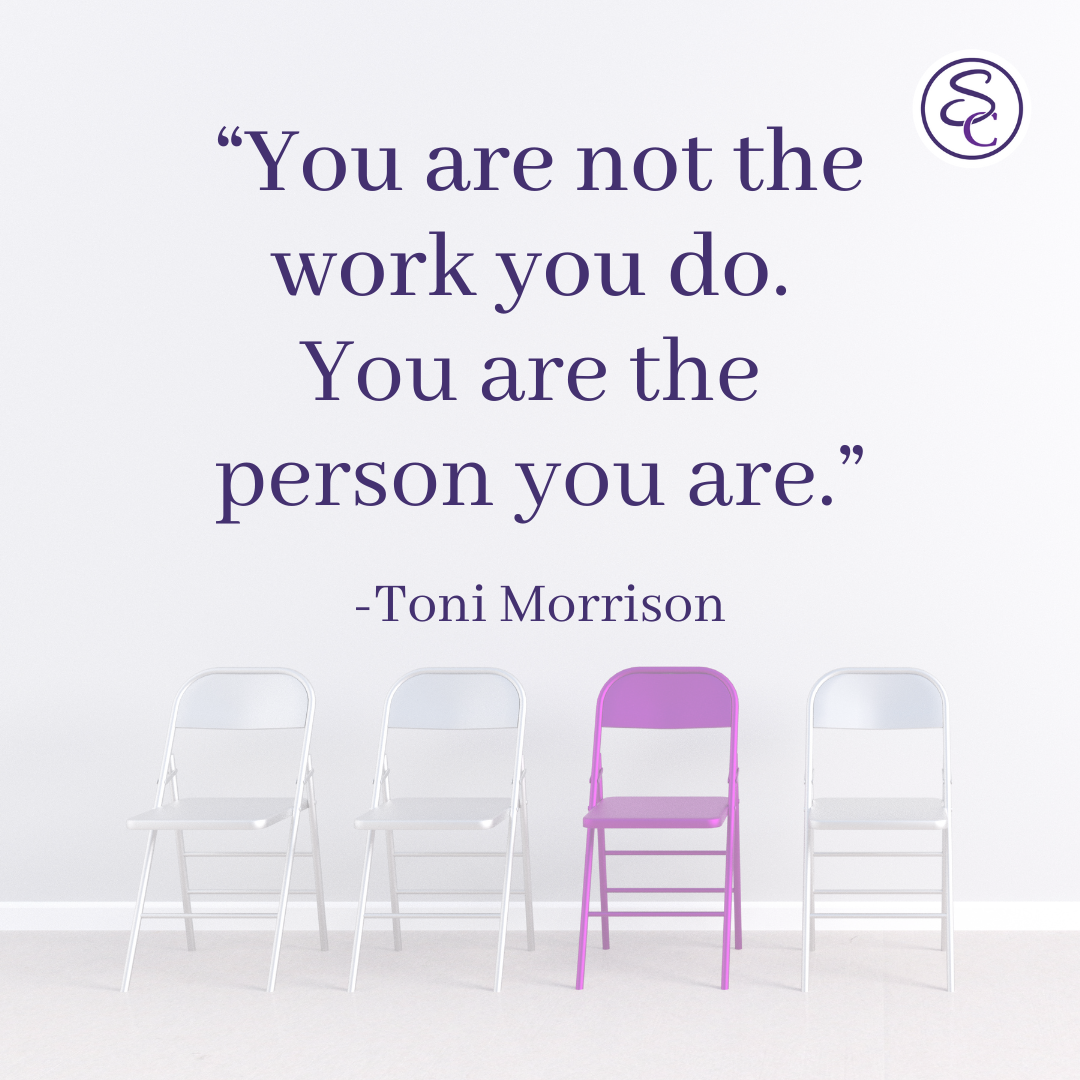
Separating your identity from a single company or title doesn’t happen overnight. It takes intention, reflection, and sometimes support. But doing that work now protects you as you move forward, so you don’t carry unnecessary shame or self-doubt into your next chapter.
You didn’t lose your skills. You didn’t lose your work ethic. You didn’t lose your ability to contribute. You lost a job. And while that’s painful, it does not define you.
3. Your “Soft Skills” Are Your Superpower
If you’re a Gen X or Millennial professional, there’s a good chance you’re sitting on a powerful advantage you don’t even realize you have.
You grew up in a workplace where you were expected to:
- Pick up the phone.
- Figure things out without a step-by-step guide.
- Take initiative instead of waiting to be told.
- Follow through, even when it was uncomfortable.
- Communicate with real humans, in real time.
These skills are often labeled “soft,” but they are anything but. Tenacity. Problem-solving. Consistency. Follow-through. Communication. Collaboration. These are foundational workplace skills, and they are increasingly rare.
Many employers are quietly struggling with teams that hesitate to make decisions, avoid direct communication, or stop at “I sent the email.” What they need are professionals who can assess a situation, take ownership, and move work forward without constant direction.
That’s where you come in.
The challenge isn’t whether you have these skills; it’s that you may not be giving yourself enough credit for them or clearly articulating them in your job search.
When framed strategically, these skills show up as:
- Leading without authority
- Navigating ambiguity
- Managing stakeholders with competing priorities
- Anticipating problems before they escalate
- Being someone others can rely on
These abilities translate across industries, roles, and titles. They matter just as much, if not more, than technical skills, especially when surviving a layoff.
If you’ve been laid off, it can be easy to overlook these strengths because they feel “normal” to you. But to employers, they’re often exactly what’s missing. Your experience didn’t disappear with your last job. Your value isn’t limited to a title. And the skills you bring to the table are needed, now more than ever.
4. This Is Hard. It’s Okay to Ask for Help.
Losing a job can shake your confidence, identity, and sense of momentum. Even the most capable professionals struggle while surviving a layoff, and that doesn’t mean you’re doing anything wrong.
Support might look like:
- Talking through your options with a neutral third party.
- Getting help reframing your experience and skills.
- Having accountability so you don’t have to carry this alone.
You’re allowed to need help. You’re allowed to change your plan. You’re allowed to take this one step at a time.
Surviving a layoff isn’t just about landing the next role; it’s about protecting your confidence so you can move forward with clarity and intention. And you don’t have to do it alone.